
Summer Car Prep Checklist (2026): Post-Winter Tires, Brakes & Suspension
Canadian winters are hard on every system in your vehicle. By the time April rolls around, your car has been through months of salt exposure, freeze-thaw potholes, extreme cold starts, and corrosive road chemicals.
Before you head out on a summer road trip or just start enjoying the warm weather, a post-winter inspection catches problems before they become expensive failures.
Here's the complete summer prep checklist from someone who's seen what Ontario winters do to vehicles.
Tires: The First Inspection
Tread Depth Check
If you ran winter tires all winter (as you should have), they're now off and stored. Your summer or all-season tires are back on. Before you drive, check:
- Tread depth on all four tires — use a tread depth gauge or the penny test. Minimum legal depth is 2/32", but replacement should happen at 4/32" for safety. At 2/32", your wet-weather braking is severely compromised.
- Compare front to rear — if the difference is significant, rotate immediately.
- Check for flat spots — tires stored over winter (especially without being on a rack) can develop flat spots that create vibration for the first 50–100 km of driving.
Tire Pressure
Winter storage and temperature changes affect pressure. A tire stored at 5°C and now sitting in 20°C sunshine will have different pressure than it did in November.
Check all four tires and adjust to the door placard specification. Don't guess, don't eyeball it. A properly inflated tire handles better, wears evenly, and gives you better fuel economy. Every 3 PSI below spec reduces fuel economy by about 1% and accelerates uneven wear.
For details on TPMS monitoring: TPMS tire pressure monitoring guide.
Visual Inspection
Look at each tire for:
- Sidewall cracks — from ozone exposure during storage
- Bulges or bubbles — structural damage, often from a pothole hit last fall
- Uneven wear patterns — indicating alignment issues
- Foreign objects — nails, screws, or debris that may have been picked up before storage
Brakes: Post-Winter Inspection
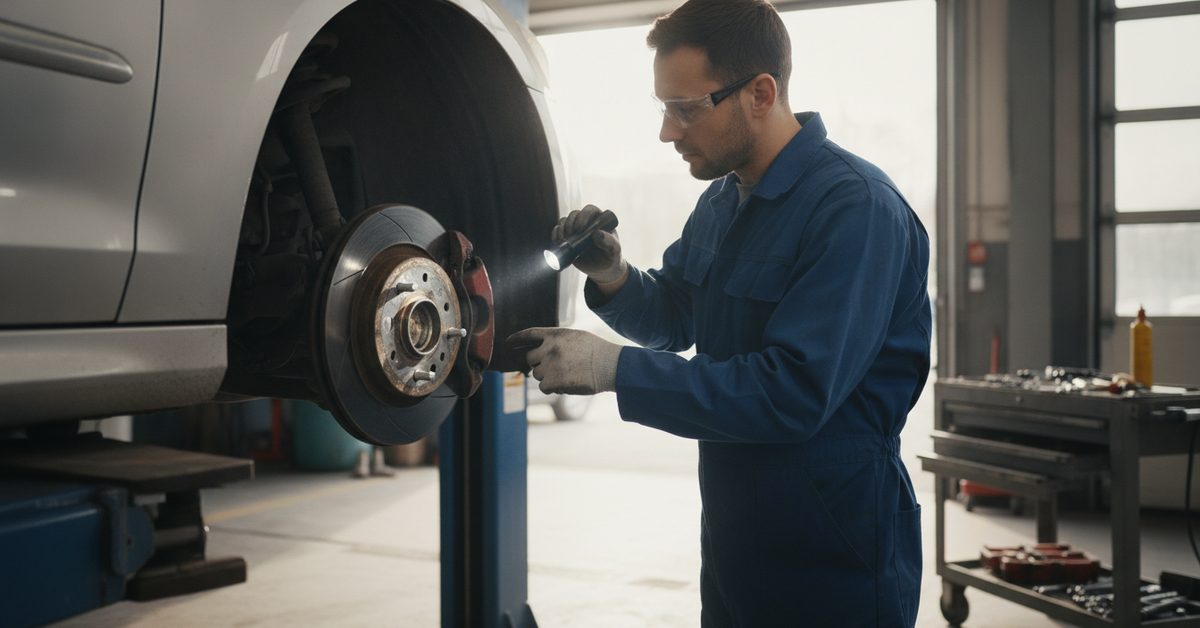
Winter is the hardest season on brakes. Salt accelerates corrosion on calipers, hardware, and rotors. Moisture gets into brake fluid. Cold temperatures stress the system differently than summer.
What to Check
Brake pad thickness: If you can see through the wheel spokes, check visible pad thickness. Anything under 4 mm needs replacement soon.
Rotor condition: Look for:
- Deep grooves (indicating worn pads were run too long)
- Rust lip on the rotor edge (normal after winter — a few hard stops usually cleans it)
- Heat spots or discoloration (indicating previous overheating)
Caliper corrosion: Salt gets into caliper slide pins and can cause them to seize. A seized caliper causes uneven pad wear and pulling under braking. If one side seems to be wearing faster, have the caliper slides inspected and lubricated.
For brake pad selection guidance, see the brake pad choosing guide. And if you're considering Bremex brake pads for your next pad change, now's a good time to plan ahead.
Suspension: Winter Pothole Damage Assessment
Ontario potholes are a suspension killer. Control arms, tie rods, ball joints, and sway bar links all take hits from winter road damage.
Signs of Suspension Damage
- Clunking or knocking over bumps — worn bushings or ball joints
- Vehicle pulling to one side — alignment shift from pothole impacts
- Uneven tire wear — misalignment or worn components allowing play
- Steering wheel vibration — bent wheel, worn tie rod end, or damaged component
- Nose dive under braking — worn struts or shocks
What to Inspect
Control arms: Check bushings for cracking, tearing, or excessive play. Push on the wheel at 12 o'clock and 6 o'clock — any play indicates worn ball joints or bushings.
Tie rod ends: Grab the tire at 3 o'clock and 9 o'clock and try to move it. Any play means tie rod ends are worn.
Sway bar links: Grab the sway bar link and try to move it. It should be firm. Any looseness or clunking means replacement.
For chassis parts replacement, the Tectonic control arms review covers Autrex's private-label suspension line. Also see the stabilizer bar guide and CV joint guide for related components.
Fluid Checks
Coolant
After a winter of cold starts and varying temperatures, check your coolant:
- Level: Should be between min and max marks on the overflow reservoir
- Condition: Should be bright green, orange, or pink (depending on type). Murky, rusty, or oily coolant indicates a problem
- Concentration: A coolant tester (about $8 at any auto parts store) confirms the freeze/boil protection is adequate
Brake Fluid
Brake fluid is hygroscopic — it absorbs moisture from the air. After a winter of condensation cycles, moisture content in brake fluid increases. This lowers the boiling point, which can cause brake fade in aggressive summer driving.
Recommendation: If your brake fluid hasn't been changed in 2+ years, summer is a good time to flush it. It's a $100 service that protects a $2,000 brake system.
Windshield Washer Fluid

Switch from winter washer fluid (which has methanol for freeze protection and de-icing) to a summer formula or a bug-removal formula. Summer washer fluid is cheaper and handles the bug splatter that's inevitable once temperatures rise.
Wiper Blades
If you ran winter wiper blades (the rubber-booted kind designed for ice and snow), swap them back to standard blades for summer. Winter blades are heavier and less aerodynamic — they lift off the windshield at highway speed, reducing visibility.
Standard blades provide better wipe performance in rain and last longer when not fighting ice buildup.
Air Filter
Road salt doesn't just sit on the road — it gets aerosolized and drawn into your engine's air intake. After a full winter of salt exposure, your air filter may be contaminated.
Pull the air filter and inspect it. If it's visibly dirty, grey, or has salt deposits, replace it. A clean air filter improves fuel economy and protects the engine from abrasive particles. Most air filters cost $15–$25 and take five minutes to replace.
Pre-Road Trip Checklist
If a summer road trip is in your plans, add these to the standard inspection:
Spare Tire
When was the last time you checked your spare? If the answer is "never" or "I don't know," check it now.
- Inflation pressure: Compact spares typically require 60 PSI — much higher than regular tires
- Condition: Check for cracks, age (DOT date code), and proper mounting
- Jack and tools: Verify they're present and functional
TPMS Check
If you just swapped from winter wheels to summer wheels, verify all four TPMS sensors are reading correctly. Some vehicles require a relearn procedure after wheel changes. See the TPMS guide.
Belts and Hoses
Extreme cold puts stress on rubber components. A belt or hose that was marginal going into winter may be ready to fail in summer heat. Look for:
- Cracks in serpentine belts
- Soft spots in coolant hoses
- Seeping or wet spots at hose connections
Summary Checklist
- Check tread depth on all four tires (replace if under 4/32")
- Adjust tire pressure to door placard spec
- Inspect tires for cracks, bulges, or damage
- Check brake pad thickness
- Inspect rotors for grooves or heat damage
- Listen for suspension clunking over bumps
- Check alignment (especially after winter pothole season)
- Check coolant level and condition
- Consider brake fluid flush if 2+ years old
- Switch to summer washer fluid
- Swap winter wiper blades for standard
- Inspect and replace air filter if dirty
- Check spare tire pressure and condition
- Verify TPMS sensors reading correctly
- Inspect belts and hoses for cracks or wear
Twenty minutes of inspection can prevent hours of roadside hassle and thousands in avoidable repairs.
Browse All-Season Tires at Autrex → | Shop Bremex Brake Pads →
Brian Barber
Automotive experts at Autrex providing in-depth guides on tires, wheels, and vehicle maintenance to help you make informed decisions.
Related Articles
Fall Tire Prep in Canada (2026): When to Get Winter Tires Ready
Fall tire prep guide: when to book winter tire appointments, inspect stored tires, and plan your budget. Get ahead before the October rush.
How to Choose Winter Tires in Canada: The Complete Buyer's Guide
How to choose winter tires in Canada: 3PMSF certification, studded vs studless, sizing down, and the 7°C rule. Complete buyer's guide for 2026.
What Is Tire Load Rating? (2026): Plain-English Guide for Canadian Drivers
Tire load rating explained: load index vs load range, P-metric vs LT, and how to choose right tire capacity for your vehicle in Canada.