
Fall Tire Prep in Canada (2026): When to Get Winter Tires Ready
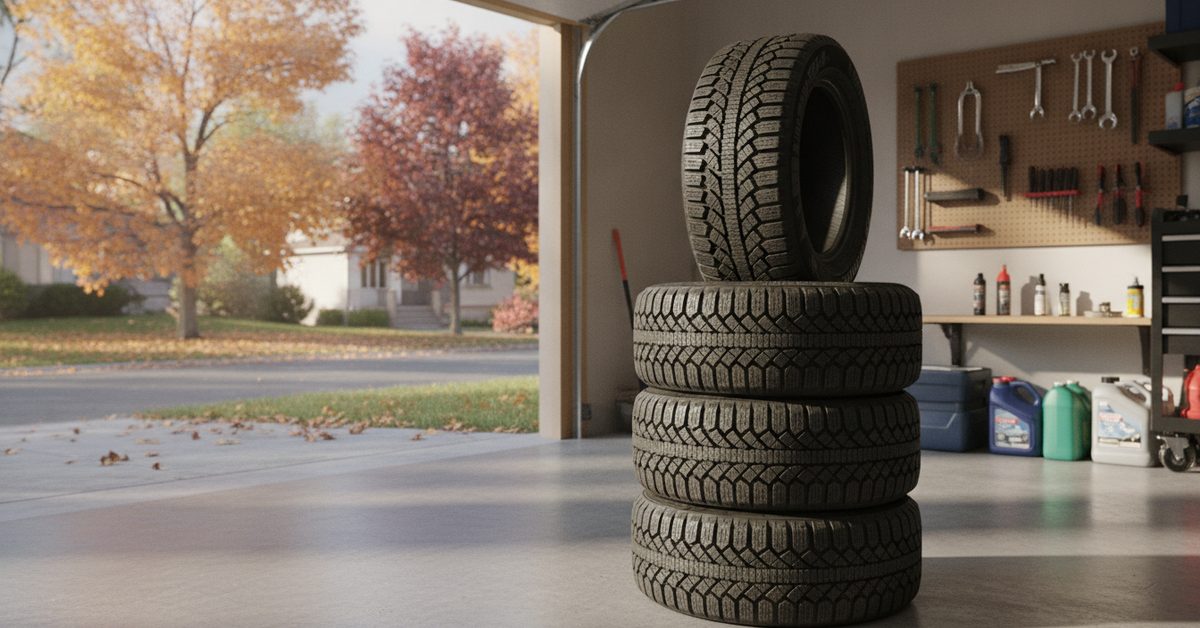
I know what you're thinking: it's June. Why am I talking about winter tires?
Because every October, our phones ring nonstop with panicked drivers who need winter tires installed next week and can't find an appointment for three weeks. Every year, the same story. By the time the first snow falls, the entire industry is overwhelmed.
The smart play is starting now. Here's how.
Why Think About Winter Tires in June
Supply Chain Reality
Winter tires don't appear on shelves in October. They're manufactured months in advance, shipped across oceans in containers (we import 30+ containers a year from multiple factories), and distributed to warehouses and shops across Canada.
Popular sizes sell out. Every year, certain sizes — especially the common crossover sizes like 225/65R17 and 235/65R17 — face shortages by mid-October. If you wait until the snow flies, you may not find your size from the manufacturer you want.
Appointment Availability
In Ontario, most tire shops book 3–4 weeks out by mid-October. The "walk-in and get it done today" window closes in early October. By late October, you're into November appointment territory.
Booking your changeover appointment now — yes, in June, for October/November — guarantees you a slot when you actually need it.
Better Pricing
Some retailers offer pre-season pricing on winter tires purchased in summer. You won't find deep discounts (winter tires are in demand), but availability is better and you're not paying the "I need this tomorrow" premium.
Inspect Your Stored Winter Tires Now
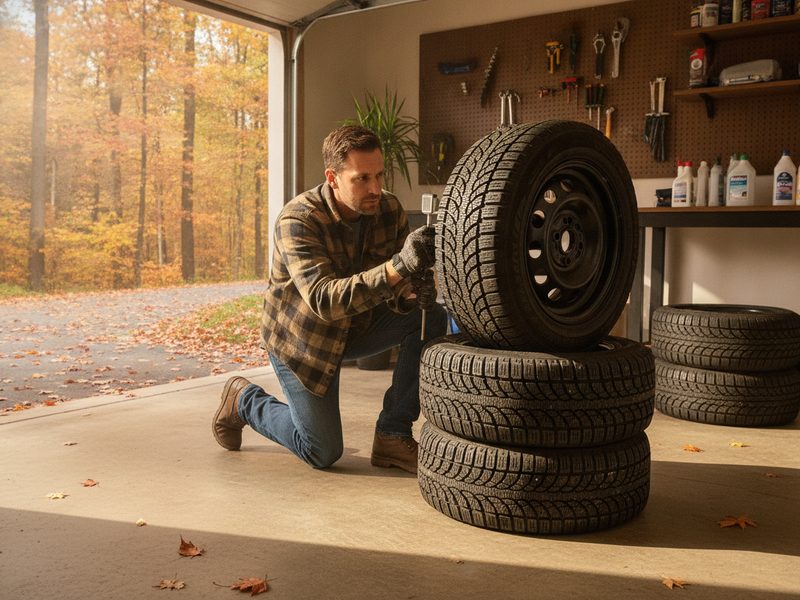
If you stored winter tires last spring, June is the time to inspect them. Finding problems now gives you months to plan, budget, and order replacements. Finding problems in October gives you a panic attack.
Tread Depth
Measure with a tread depth gauge:
- Above 5/32" — Good for another winter
- 4/32" to 5/32" — This is the last winter. Plan to replace next year
- Below 4/32" — Replace before this winter. Winter tires lose significant performance below 4/32"
Sidewall Condition
Look for:
- Cracks — Small surface cracks from six months of storage are cosmetic. Deep cracks or cracking around the bead area are a concern.
- Bulges or deformation — Structural damage that requires replacement
- Flat spots — From improper storage (tires sitting on one spot without rotation). These usually work themselves out after 50–100 km of driving.
Age Check
Check the tire date code — the last four digits of the DOT number. Format is WWYY (week and year).
- Under 6 years old: Good condition
- 6–10 years old: Inspect carefully, may still be usable
- Over 10 years: Replace regardless of tread depth. Rubber compounds degrade internally even without use
For more on tire age and safety: tire casings and retreaded tires guide.
Storage Damage: What to Look For
Six months in a garage, basement, or storage unit can cause problems if storage conditions weren't ideal:
Heat Damage
If your tires were stored near a furnace, water heater, or in an uninsulated garage that got hot in summer, the rubber may have accelerated aging. Look for hardening or surface cracking.
Ozone Damage
Electric motors, fluorescent lights, and some electronics generate ozone that degrades rubber. If your tires were stored next to any of these, check for surface cracking.
Moisture Damage
Tires stored in damp conditions (wet basement, outdoor shed without waterproofing) may have surface mold or corrosion on the rims. Clean and inspect.
Rodent Damage
Not kidding. Mice and squirrels nest in stored tire stacks. Check inside the tires for nesting material and check rubber for gnaw damage.
Budget Planning: What Winter Tires Cost in Ontario (2026)
Plan your budget now so October doesn't surprise you:
Passenger Car (Civic, Corolla, Camry, Elantra)
| Component | Budget | Mid-Range | Premium |
|---|---|---|---|
| Winter tires (set of 4) | $250–$350 | $400–$560 | $600–$800 |
| Steel wheels (set of 4) | $200–$300 | $200–$300 | $200–$300 |
| TPMS sensors (set of 4) | $120–$200 | $120–$200 | $120–$200 |
| Installation | $40–$80 | $40–$80 | $40–$80 |
| Total (first year) | $610–$930 | $760–$1,140 | $960–$1,380 |
| Subsequent years (swap only) | $40–$80 | $40–$80 | $40–$80 |
SUV/Crossover (RAV4, CR-V, Rogue, Equinox)
| Component | Budget | Mid-Range | Premium |
|---|---|---|---|
| Winter tires (set of 4) | $280–$400 | $480–$640 | $700–$900 |
| Steel wheels (set of 4) | $250–$350 | $250–$350 | $250–$350 |
| TPMS sensors (set of 4) | $120–$200 | $120–$200 | $120–$200 |
| Installation | $40–$80 | $40–$80 | $40–$80 |
| Total (first year) | $690–$1,030 | $890–$1,270 | $1,110–$1,530 |
The first year is the big investment. After that, it's just the annual swap fee.
Dedicated Steel Wheel Setup: The One-Time Investment
If you're not already running a dedicated winter steel wheel setup, this is the upgrade that pays for itself fastest:
- Eliminates seasonal mounting/balancing fees — $80–$120 per changeover saved
- Faster changeovers — 20-minute wheel swap vs. 60-minute mount-and-balance
- Protects your alloy wheels — no salt exposure, no pothole risk
- Better winter performance — steel wheels are tougher, and the narrower winter tire cuts through snow better
Over 5 years, the mounting fee savings alone exceed the cost of the steel wheels.
Pre-Order Advantage: Why Early Birds Win
Buying winter tires off-season offers practical advantages:
Availability
Popular sizes sell out by November. Ordering in August or September guarantees your size is in stock.
Size Selection
Some sizes only get limited production runs. The Haida HD617 in every common size? Usually available. The Michelin X-Ice Snow in 225/55R19? Limited allocation for Canada.
Shipping
Off-season orders ship faster because the warehouses aren't swamped. October orders compete with thousands of other orders for shipping priority.
Winter Tire Picks to Get on Order
Budget: Haida HD617
From $62/tire. The most affordable 3PMSF-certified winter tire available in Canada. Covers virtually every passenger car and crossover size. See the full HD617 review.
Performance: Atturo AW730
For performance vehicle owners who need a winter tire with highway stability. See the AW730 winter review.
Premium
Michelin X-Ice Snow, Nokian Hakkapeliitta R5, and Bridgestone Blizzak WS90 remain the gold standard. Order early — they're the first to sell out in popular sizes.
Changeover Timing Guide
Don't wait for the first snow. Plan your changeover based on when temperatures consistently drop below 7°C:
| Region | Typical Changeover Window |
|---|---|
| BC Lower Mainland | Late November |
| BC Interior / Mountains | Mid-October |
| Alberta | Late October |
| Saskatchewan / Manitoba | Mid-October |
| Ontario (GTA) | Late October – early November |
| Ontario (Ottawa/Eastern) | Mid-October – late October |
| Ontario (Northern) | Early October |
| Quebec | Before December 1 (mandatory) |
| Atlantic Canada | Late October – early November |
For the complete spring removal timing and process, see the spring tire changeover checklist.
The Bottom Line
October you will thank June you for being prepared. Inspect your stored tires now. Budget for replacements if needed. Book your changeover appointment early. And if you're buying new winter tires, order before the rush.
It's the same story every year: the people who plan ahead drive confidently through winter. The people who wait until the last minute drive nervously on all-seasons until their appointment date.
Don't be that person.
Brian Barber
Automotive experts at Autrex providing in-depth guides on tires, wheels, and vehicle maintenance to help you make informed decisions.
Related Articles
Winter Tires in Québec 2026: Law, Dates and Buyer's Guide
Québec winter tire law for 2026: mandatory December 1 to March 15, the 3PMSF symbol, studded vs studless, sizing and when to install. Plus in-stock winter tires.

Summer Car Prep Checklist (2026): Post-Winter Tires, Brakes & Suspension
Summer car prep checklist: post-winter tire inspection, brake check, suspension inspection, and road trip readiness for Canadian drivers.
How to Choose Winter Tires in Canada: The Complete Buyer's Guide
How to choose winter tires in Canada: 3PMSF certification, studded vs studless, sizing down, and the 7°C rule. Complete buyer's guide for 2026.