
Tectonic Control Arms Review (2026): Quality, Fitment & Value
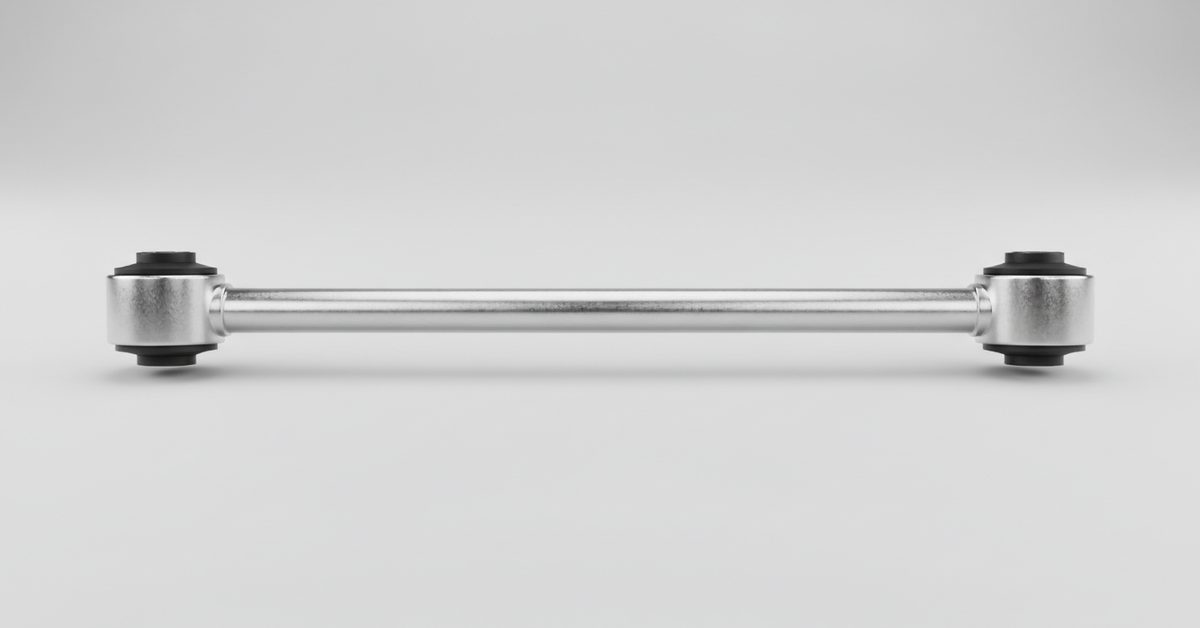
When we decided to launch Tectonic as Autrex's private-label chassis line, we had one question to answer: can we build suspension parts that match OEM fitment and durability at a price that makes sense for the average Canadian driver?
After extensive sourcing and real-world customer feedback across Eastern Ontario, the answer is yes. Here's the full breakdown.
What Is the Tectonic Lineup?
Tectonic is a complete chassis parts line covering the components that wear out most frequently on Canadian vehicles:
- Control arms (upper and lower, front and rear)
- Tie rod ends (inner and outer)
- Ball joints (upper and lower)
- Sway bar links (front and rear)
- Stabilizer bar bushings
These are the parts that Ontario's roads destroy. Freeze-thaw potholes, frost heaves, and years of road salt combine to wear out suspension components faster than almost anywhere else in North America.
For a deeper look at how stabilizer bars work and when to replace them, see the stabilizer bar guide.
Manufacturing Quality: What You're Getting
Forged vs. Stamped Steel
Tectonic control arms use forged steel construction for high-stress applications and stamped steel for lighter-duty fitments. The choice depends on the vehicle application:
- Forged steel arms: Stronger, heavier, more expensive. Used on trucks, SUVs, and performance vehicles where loads are higher.
- Stamped steel arms: Lighter, cost-effective, fully adequate for passenger cars and light crossovers.
Both types are heat-treated and e-coated for corrosion resistance — critical in Canada's salt-heavy environment.
Bushing Material
Tectonic uses OEM-equivalent rubber bushings rather than polyurethane. Here's why:
Polyurethane bushings are popular in the performance aftermarket because they're stiffer and last longer. But they also transmit more road noise and vibration. For a daily-driven Camry or CR-V, that's not a feature — it's a complaint.
OEM rubber bushings deliver the ride quality and noise isolation that matches what the vehicle was designed for. Our bushing durometer (hardness) is matched to OEM specifications for each application.
Ball Joint Construction
Tectonic ball joints use hardened steel studs with polished bearing surfaces and preloaded housings. The grease fittings are Zerk-type, allowing ongoing lubrication — a feature some economy brands eliminate to save cost.
The preload matters because a loose ball joint creates the clunking noise and sloppy steering that sends people to the parts store in the first place.
Fitment Accuracy
Fitment is where aftermarket chassis parts either shine or create headaches. A control arm that's 2mm off on a mounting point creates alignment issues that no shop adjustment can fully correct.
Tectonic parts are manufactured to OEM dimensional tolerances. We verify:
- Mounting point locations
- Bushing bore dimensions
- Ball joint stud taper angles
- Overall arm geometry
Our fitment testing includes actual installation on reference vehicles — not just paper spec comparison. If a Tectonic arm says it fits a 2018–2024 Honda CR-V, it's been physically verified on that chassis.
Vehicle Coverage
Current Tectonic coverage includes:
- Honda Civic, Accord, CR-V (2012–2026)
- Toyota Camry, Corolla, RAV4 (2012–2026)
- Ford F-150, Escape, Explorer (2011–2026)
- RAM 1500 (2013–2026)
- Chevrolet Silverado 1500, Equinox, Traverse (2014–2026)
- Jeep Wrangler JK/JL, Grand Cherokee (2012–2026)
- Hyundai Tucson, Santa Fe (2016–2026)
- And 200+ additional applications
Coverage is expanding based on Canadian sales volume. The most common vehicles on Ontario roads are covered first.
Installation: DIY-Friendly or Shop-Install?
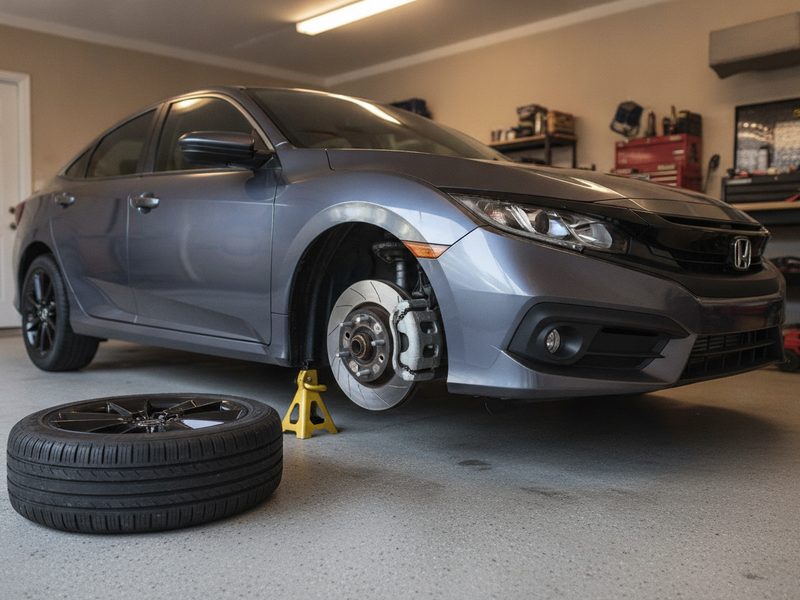
Control arm replacement is an intermediate-level job. You need:
- Floor jack and jack stands
- Ball joint press or separator
- Torque wrench
- Basic hand tools
The honest assessment: If you're comfortable doing brake jobs, you can probably handle control arms. If you've never been under a car, this isn't the first job to try. The ball joint press is the tricky part — improper technique can damage the new joint.
Most shops charge $200–$400 per control arm for parts and labour. A Tectonic control arm costs $60–$120 depending on the application. Even paying a shop for labour, you're saving significantly over OEM replacement parts.
Comparison: Tectonic vs. Moog, TRQ, Dorman
| Factor | Tectonic | Moog | TRQ | Dorman |
|---|---|---|---|---|
| Price (typical lower arm) | $60–$120 | $80–$160 | $50–$100 | $70–$130 |
| Construction | Forged/stamped steel | Forged/stamped steel | Stamped steel | Stamped steel |
| Bushing type | OEM rubber | Premium rubber | OEM rubber | OEM rubber |
| Ball joint quality | Preloaded, Zerk fitting | Preloaded, Zerk fitting | Standard | Standard |
| Corrosion coating | E-coat | E-coat | Paint | E-coat |
| Canadian availability | Direct from Autrex | Wide distribution | Online retailers | Wide distribution |
| Warranty | 12 months | Limited lifetime | 12 months | Limited lifetime |
Tectonic competes directly with Moog on quality at a lower price point. Against TRQ and Dorman, the Tectonic advantage is in ball joint quality and corrosion protection.
When to Replace Control Arms: Signs of Wear
Don't wait until something breaks. Watch for:
- Clunking over bumps — the most common symptom of worn bushings or ball joints
- Steering pull — the vehicle drifts to one side under braking or acceleration
- Uneven tire wear — worn control arm bushings allow alignment to shift, causing inner or outer edge wear
- Vibration at highway speed — loose components create vibration that worsens with speed
- Visual inspection — cracked bushings, torn boots, play in ball joints
In Ontario, control arm wear is accelerated by road conditions. Where southern US drivers might get 150,000 km from OEM control arms, Ontario drivers often see wear at 80,000–100,000 km.
For related suspension diagnostics, the CV joint guide and drive shaft guide cover complementary components worth inspecting when you're under the vehicle.
Warranty and Support
Tectonic parts carry a 12-month warranty against material defects and premature failure. Claims are handled directly through Autrex — no third-party manufacturer runaround.
If a Tectonic part fails within warranty, we replace it. Straightforward.
Related Suspension Maintenance
When you're replacing control arms, it's worth inspecting complementary components:
- Tie rod ends: If your vehicle has clunking or steering looseness, tie rods may also be worn. Grab the tire at 3 and 9 o'clock and try to move it — any play indicates worn tie rods.
- Sway bar links: These wear faster than control arms and are cheap to replace. If you're already under the vehicle, inspect the sway bar bushings and links.
- Ball joints on other arms: Control arms often come in sets. If the lower is worn, check the upper. If the front is worn, inspect the rear.
For related reading, see the stabilizer bar guide and CV joint guide.
The Bottom Line
Tectonic control arms and chassis parts deliver OEM-equivalent fitment and quality at aftermarket pricing. They're not the cheapest option on the market — that's intentional. We'd rather sell a part that lasts than a part that creates a warranty claim.
For Canadian drivers dealing with Ontario's demanding road conditions, the combination of proper corrosion protection, accurate fitment, and quality ball joints makes Tectonic a smart choice for suspension maintenance.
Browse Suspension Parts at Autrex → | Shop Tectonic Chassis Parts →
Brian Barber
Automotive experts at Autrex providing in-depth guides on tires, wheels, and vehicle maintenance to help you make informed decisions.
Related Articles
Buckshot Rugged Terrain Tires Canada: Sizes, Ratings and Review Guide
Buckshot Rugged Terrain tires for Canadian trucks and SUVs: the brand's history, 14 LT sizes with load and speed ratings, snow notes and who should buy.
Fortune Tires Review Canada 2026: Climaflex 4S and Tormenta A/T2
Fortune Tires explained for Canadian drivers: who makes them, the Climaflex 4S all-weather and Tormenta all-terrain line-up, sizes, ratings and 3PMSF notes.
Tercelo Tires Review Canada 2026: Croseason 4S All-Weather Guide
Tercelo tires for Canadian drivers: who is behind the brand, the Croseason 4S four-season tire, 50 sizes, 3PMSF notes and who should buy.