
How to Choose Brake Pads (2026): Ceramic vs Semi-Metallic Guide
Brake pads are one of those parts that most people ignore until there's a problem. Then they go to a shop, accept whatever the service advisor recommends, and pay whatever it costs.
That doesn't have to be you.
Understanding brake pad types, specs, and what actually matters for your specific vehicle and driving style will save you money, extend your rotor life, and — most importantly — keep you stopping confidently on Ontario's freeze-thaw roads.
The Three Main Types of Brake Pads
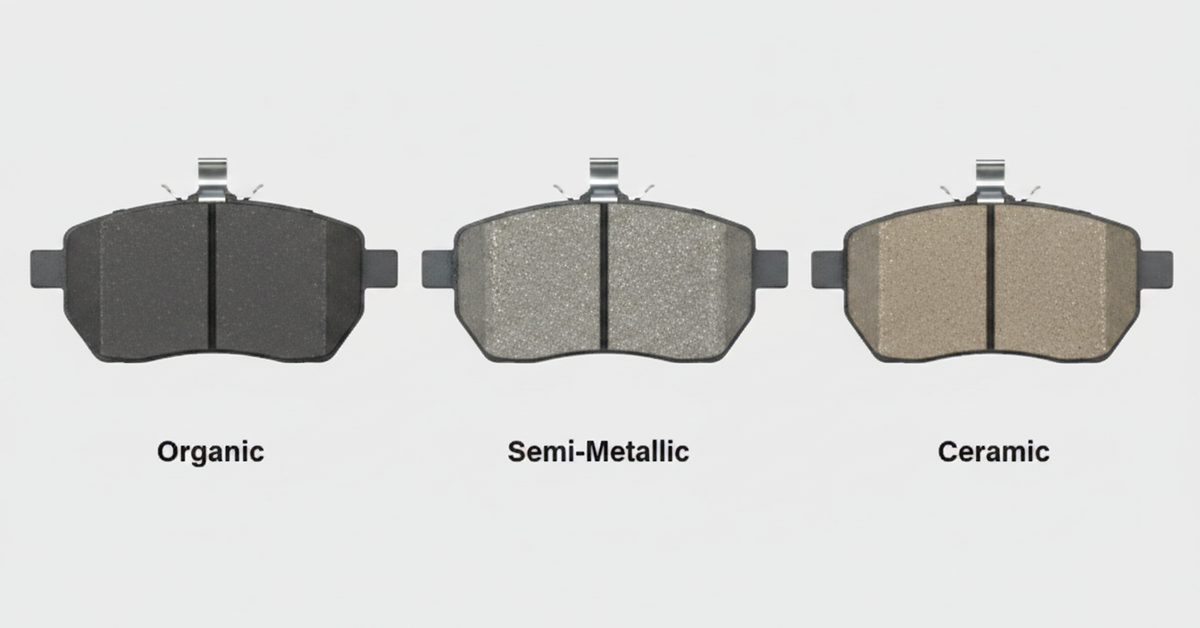
Organic (Non-Asbestos Organic / NAO)
Organic brake pads are made from a mixture of natural fibres, rubber, carbon, and glass bonded with resin. They're the softest of the three types.
What they're good at:
- Quiet operation — low noise compared to metallic options
- Gentle on rotors — soft compound doesn't accelerate rotor wear
- Good initial bite — they engage effectively at moderate temperatures
Where they fall short:
- Fade at high temperatures — if you're a hard braker, or doing mountain driving, organic pads can get hot and lose stopping power
- Higher dust production — you'll notice dark powder on your wheels
- Shorter lifespan — soft compound wears faster
- Not suited for towing or heavy loads
Best for: Light-duty passenger cars in normal daily driving conditions. The typical Civic or Corolla doing GTA commuting.
Semi-Metallic
Semi-metallic brake pads contain 30–65% metal content — usually steel wool, iron, copper, or other metals — bonded with a friction material. They're the most common type found on mid-range and performance vehicles from the factory.
What they're good at:
- Excellent heat dissipation — metal conducts heat away from the braking surface, reducing fade
- Longer lifespan than organic
- Better performance under heavy use: towing, mountain driving, aggressive driving
- Wide temperature operating range
Where they fall short:
- More rotor wear than ceramic or organic — the harder compound affects rotors
- More noise, especially when cold — that morning squeal is often semi-metallic pads
- Heavier dust production
- Can feel less smooth in gentle, everyday braking
Best for: Trucks, SUVs, vehicles used for towing, and drivers who prefer a more aggressive braking feel. Also the standard choice for most OEM applications on performance vehicles.
Ceramic
Ceramic brake pads use a dense ceramic compound with embedded copper fibres. They were developed to solve the problems with semi-metallic pads without the limitations of organic.
What they're good at:
- Very quiet operation — the most refined braking feel of the three
- Low dust — and what dust there is tends to be light-coloured and less visible on wheels
- Good temperature range — handles heat well without the metallic noise issues
- Gentle on rotors compared to semi-metallic
- Consistent pedal feel
Where they fall short:
- Higher initial cost
- Less effective at very low temperatures — in a Canadian January, some ceramic compounds need a few stops to warm up before they're at full effectiveness
- Not ideal for heavy-duty towing or track use — they're not built for extreme heat cycles
Best for: Passenger cars and crossovers used for daily driving. If you want quiet, clean, consistent braking without drama, ceramic is the choice.
What Actually Matters: The Real Criteria
Stopping Distance
This is the most important metric. The difference between a quality brake pad and a cheap one can be several metres of stopping distance on wet pavement. In an emergency situation at highway speed, those metres matter.
Budget pads from no-name brands often compromise on friction coefficient — the measure of how much grip the pad has on the rotor. Don't optimize too hard for price on brake pads.
Rotor Wear
Brake rotors cost $60–$150 each on most passenger cars. If cheap brake pads accelerate rotor wear, you may end up replacing rotors more frequently. The total cost of ownership matters, not just the pad price.
Ceramic pads are the gentlest on rotors. Aggressive semi-metallic pads can eat through rotors faster.
Dust and Noise
This is quality-of-life, not safety — but it matters. If you have nice alloy wheels, heavy brake dust discolouration after a week of driving is frustrating. Ceramic pads produce significantly less visible dust.
Noise — the morning squeal or brake screech under hard stops — is almost always a pad compound issue. Ceramic pads are the quietest option.
Heat Fade
On a hot August day on the 401 doing a lot of hard braking, cheaper pads can fade — meaning the friction coefficient drops as the pad gets hot, and your stopping distances increase. This is especially relevant for:
- SUV and truck drivers
- Anyone who tows
- Drivers in hilly areas or doing mountain passes in BC or Eastern Ontario
Temperature Fade (Cold)
The opposite problem exists in Canadian winters. Some high-performance compounds (including some premium ceramics) don't bite well until they've warmed up. For daily driving in -20°C Ottawa winters, you want a pad that's effective from the first stop in the morning.
Understanding Brake Pad Specs: Friction Codes
Look on the box or pad edge for the friction coefficient code — a two-letter designation that tells you the cold and hot friction ratings.
| Letter | Friction Coefficient |
|---|---|
| C | Under 0.15 |
| D | 0.15–0.25 |
| E | 0.25–0.35 |
| F | 0.35–0.45 |
| G | 0.45–0.55 |
| H | 0.55–0.65 |
| Z | Unclassified |
The first letter is the cold friction rating; the second is the hot rating. Most passenger car brake pads are EE (decent in cold and heat), FF (good in both), or GG (high-performance).
A pad marked "FF" on the box means its friction coefficient stays in the 0.35–0.45 range both cold and hot — consistent performance across temperatures.
This spec matters especially in Canada where cold-morning braking performance is relevant.
Use Case Guide: Which Pad for Which Driver
| Driver Type | Recommended Type | Key Priority |
|---|---|---|
| GTA daily commuter | Ceramic | Low noise, low dust |
| Family SUV | Semi-metallic or ceramic | Heat resistance, tread life |
| Truck driver (towing) | Semi-metallic | Heat dissipation under load |
| Performance car (track days) | Performance semi-metallic | High heat tolerance |
| Older vehicle / budget conscious | Semi-metallic | Cost-effective, long life |
| Luxury car owner | Premium ceramic | Refinement, wheel cleanliness |
When to Replace: Visual Inspection Guide
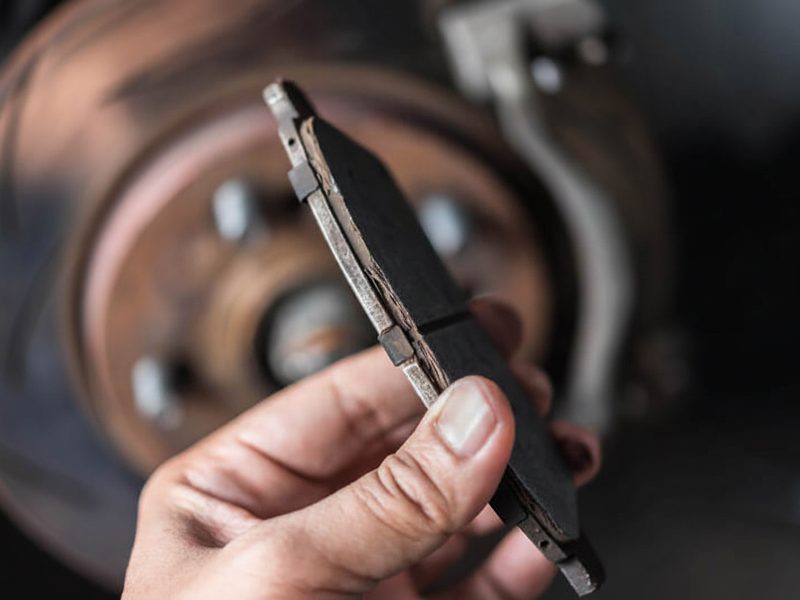
Thickness measurement: New brake pads are typically 10–12 mm thick. Replace at 3–4 mm or when the wear indicator starts squealing. Most pads have a built-in wear indicator — a small metal tab that contacts the rotor and creates a high-pitched squeal when pads reach minimum thickness.
Visual inspection (without removing the wheel): Look through the wheel spokes at the outer brake pad. You should see at least 3–4 mm of friction material remaining. If you can barely see any material between the backing plate and the rotor, replace immediately.
Other warning signs:
- Grinding noise — metal-on-metal contact, meaning the pad material is gone
- Pulling to one side when braking — uneven pad wear or a sticking caliper
- Vibration through the brake pedal — warped rotors, often caused by uneven or worn pad material
- Longer stopping distances — degraded compound or glazed pads
OEM vs. Aftermarket: What to Look For
OEM brake pads (from dealerships, branded as your vehicle manufacturer) are often made by the same third-party suppliers as quality aftermarket pads — just with different labels and higher prices.
Quality aftermarket pads from reputable manufacturers match or exceed OEM performance at 30–50% less cost. The key is choosing an established brand with proper certification.
Introducing Bremex Brake Pads
Bremex is Autrex's private-label brake brand, manufactured to OEM-equivalent specifications. Engineered to match factory friction coefficients, featuring proper wear indicators, and tested for stopping distance and heat performance — Bremex is the quality-without-the-premium-brand-markup option.
Read the full Bremex brake pads review for real-world testing data and performance comparisons.
Red Flags: What to Avoid
- No friction coefficient markings — A brake pad with no EE/FF/GG code on the box is a red flag. Legitimate manufacturers certify their friction coefficients.
- Unusually low pricing — $15 for a set of brake pads is not a deal. It's a warranty claim waiting to happen.
- Squealing immediately after installation — Some pad break-in is expected, but persistent squeal from new pads means either incompatible compound or improper installation.
- Heavy metallic smell after normal driving — This indicates a sticking caliper or a pad compound that's running too hot for your application.
Maintenance Matters Too
Brake pads don't work in isolation. The system includes rotors, calipers, hardware, and the brake fluid.
- Replace rotors at minimum thickness — Rotors have a spec minimum. Running below minimum thickness risks cracking and reduces heat capacity.
- Inspect hardware — Brake hardware (clips, shims, anti-squeal components) should be replaced with every pad change. This is included in quality pad kits.
- Check brake fluid — Brake fluid is hygroscopic (absorbs moisture). Old, moisture-contaminated fluid has a lower boiling point, which contributes to fade. Change every 2–3 years.
For related suspension and drivetrain maintenance context, the CV joint guide covers what else to inspect when you're under the vehicle.
The Bottom Line
Choosing the right brake pads for your vehicle comes down to three questions:
- How do you use the vehicle? (daily commuting, towing, performance driving)
- What do you prioritize? (quietness, rotor longevity, maximum stopping power)
- What's your budget, including the cost of rotor wear over time?
For most Canadian daily drivers — ceramics if you prioritize quietness and clean wheels; semi-metallic if you tow, drive aggressively, or prioritize maximum fade resistance.
Whatever you choose, don't cheap out. Your brakes are literally the most important safety system on your vehicle.
Brian Barber
Automotive experts at Autrex providing in-depth guides on tires, wheels, and vehicle maintenance to help you make informed decisions.
Related Articles
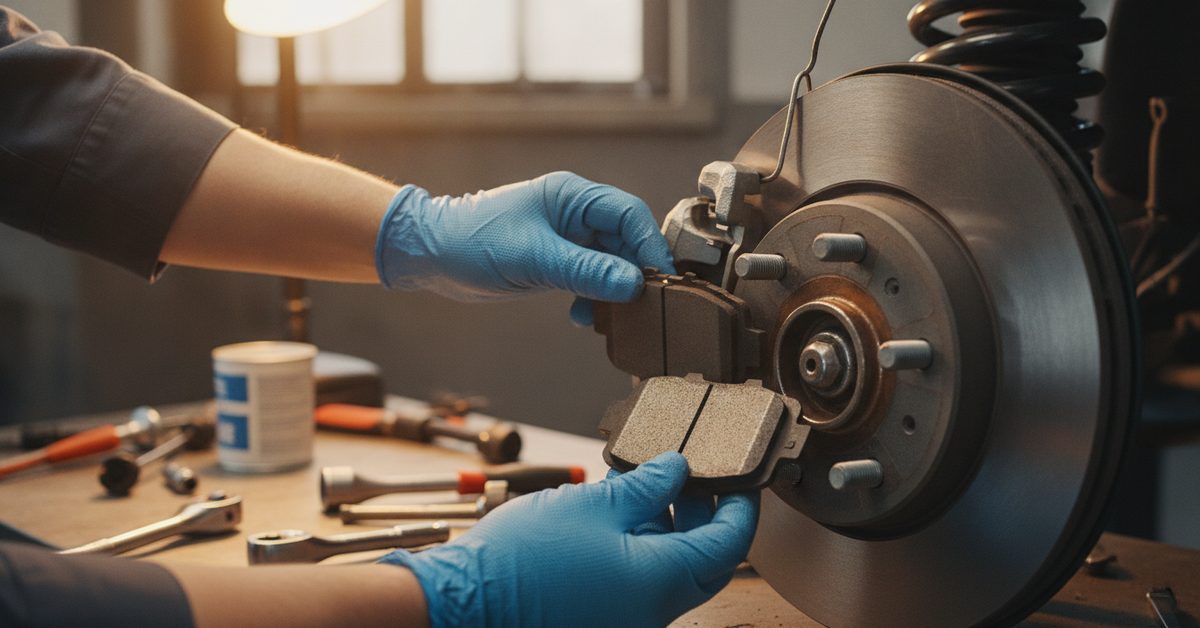
DIY Brake Pad Replacement Guide (2026): Step-by-Step for Canadian DIYers
DIY brake pad replacement guide: tools, safety, installation, bedding in, and cost savings. Save $300+ per axle vs Canadian shop rates.
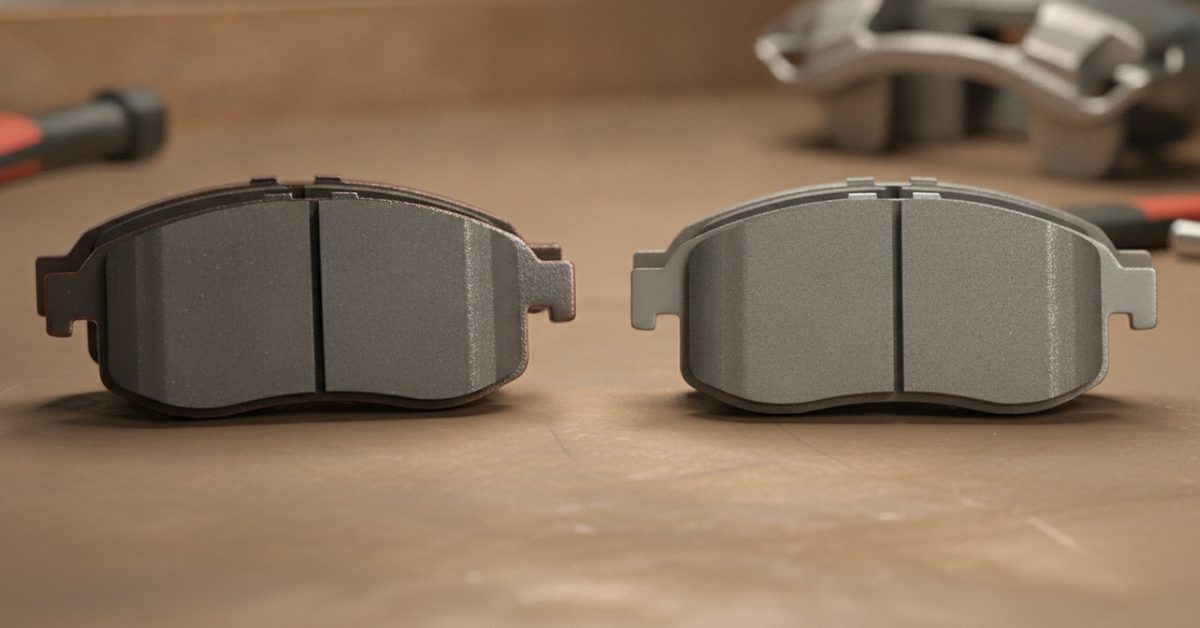
Bremex vs. OEM Brake Pads (2026): Real-World Comparison for Canadian Drivers
Bremex vs OEM brake pads: stopping distance, noise, dust, rotor wear, and total cost of ownership. Save 40–55% without sacrificing safety.
Buckshot Rugged Terrain Tires Canada: Sizes, Ratings and Review Guide
Buckshot Rugged Terrain tires for Canadian trucks and SUVs: the brand's history, 14 LT sizes with load and speed ratings, snow notes and who should buy.