
DIY Brake Pad Replacement Guide (2026): Step-by-Step for Canadian DIYers
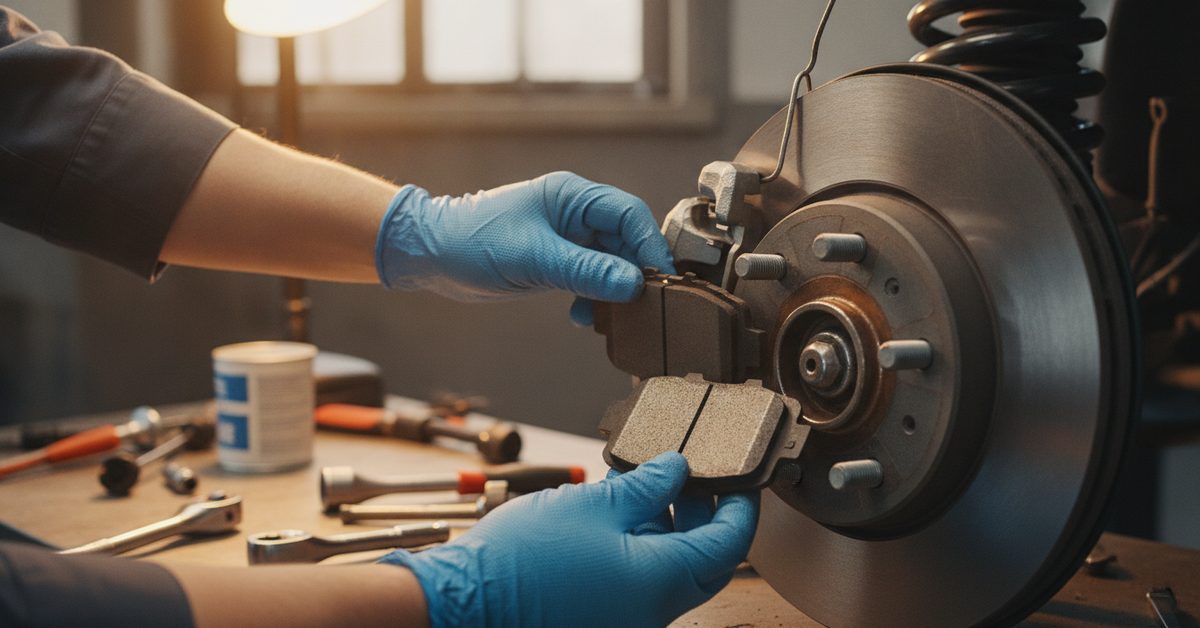
Replacing brake pads is one of the most accessible DIY jobs on a modern car. With basic tools and a couple of hours, you can save $300–$500 per axle compared to what an Ontario shop charges.
Here's the complete process, including the safety steps that matter and the common mistakes that create problems.
Tools You'll Need
Before you start, gather everything. There's nothing worse than having a wheel off and realizing you're missing a tool.
Essential Tools
- Floor jack — hydraulic floor jack rated for your vehicle's weight
- Jack stands (two minimum) — never work under a vehicle on just a floor jack
- Lug wrench or breaker bar — for wheel removal
- Socket set (metric for most vehicles) — caliper bolts are typically 14 mm or 17 mm
- C-clamp or brake caliper piston tool — for compressing the caliper piston
- Torque wrench — for reassembly to spec
- Wire brush — for cleaning caliper bracket
- Brake cleaner — aerosol for cleaning components
Recommended But Not Essential
- Brake grease — for caliper slide pins and pad backing plates
- Turkey baster — for removing excess brake fluid from the reservoir
- Anti-seize compound — for wheel studs (if applicable)
- Zip ties or wire hanger — for supporting the caliper
Total tool investment if you're starting from zero: about $100–$150. These tools will last for years and pay for themselves on the first brake job.
Safety Checklist Before Starting
Brake work is straightforward, but mistakes have consequences. Follow these safety rules:
- Work on a flat, level surface — not a slope, not gravel, not grass
- Set the parking brake and place wheel chocks behind the opposite wheels
- Let the brakes cool — don't work on hot brakes. Give the car at least 30 minutes after driving
- Use jack stands — a floor jack is for lifting only, not for holding the vehicle up while you work underneath
- Never press the brake pedal with the caliper removed — the piston will push out of the caliper bore
- Keep brake fluid off painted surfaces — it's corrosive and will damage paint
Step-by-Step Process
Step 1: Loosen Lug Nuts
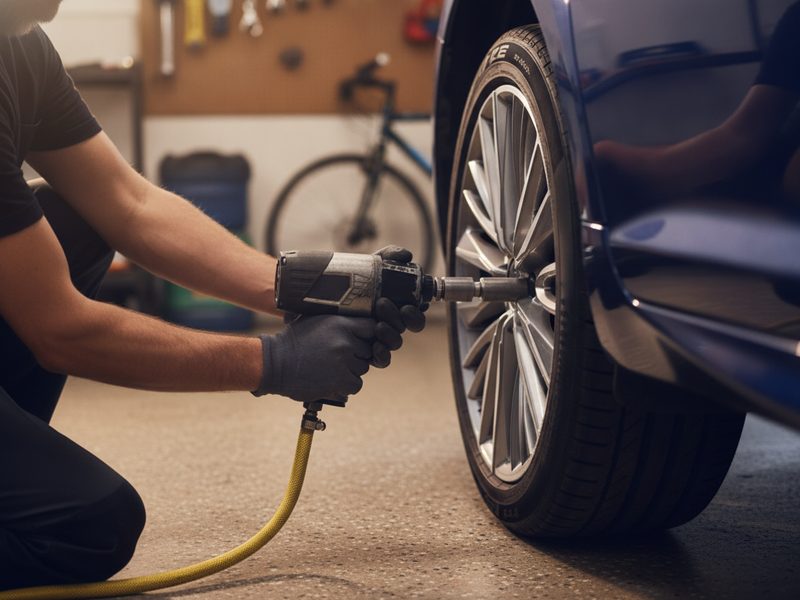
With the vehicle on the ground, loosen (but don't remove) the lug nuts on the wheel you're starting with. A half-turn is enough. Trying to break lug nuts loose with the vehicle in the air is frustrating and dangerous — the wheel just spins.
Step 2: Lift the Vehicle and Remove the Wheel
Position the floor jack under the manufacturer's recommended lift point (check your owner's manual). Lift until the tire is off the ground, then place a jack stand under a solid structural point.
Lower the jack slightly so the vehicle rests on the jack stand. Then remove the lug nuts and wheel.
Step 3: Inspect the Caliper and Rotor
Before disassembly, take a good look:
- Brake fluid leaks around the caliper — indicates a seal failure
- Rotor condition — deep grooves, cracks, heat spots
- Rotor thickness — check with a micrometer against the minimum thickness spec stamped on the rotor
Step 4: Remove the Caliper
Locate the caliper bolts (typically two bolts on the back of the caliper, 14 mm or 17 mm). Remove them.
Important: Do NOT let the caliper hang by the brake hose. Use a zip tie, wire hanger, or bungee cord to support the caliper from the suspension or a convenient hook point.
Step 5: Remove Old Pads
The old pads slide out of the caliper bracket. Note how they're oriented — inner pad and outer pad may be different, and there may be wear indicators on one side.
Step 6: Compress the Caliper Piston
The new pads are thicker than the worn ones, so the caliper piston needs to be pushed back to make room.
Before compressing: Open the brake fluid reservoir cap and check the level. As you compress the piston, fluid pushes back into the reservoir. If it's already full, use a turkey baster to remove some fluid.
Place the C-clamp or piston tool against the piston face and slowly compress it back into the bore until it's flush. Go slowly — forcing it can damage the piston seal.
Note for rear calipers with integrated parking brake: Some vehicles require the piston to be rotated and compressed simultaneously using a special tool. Check your vehicle's service manual.
Step 7: Clean the Caliper Bracket
With the pads out, clean the caliper bracket slide surfaces with a wire brush and brake cleaner. Salt corrosion builds up here and prevents the pads from sliding freely, causing uneven wear.
Apply a thin layer of brake grease to the slide surfaces where the pad ears sit.
Step 8: Install New Pads
Slide the new pads into the caliper bracket. They should move freely on the slide surfaces. If they're tight, clean the bracket more thoroughly.
Apply a thin layer of brake grease (or the anti-squeal compound included in quality pad kits) to the back of the pad backing plates — never on the friction surface.
Step 9: Reinstall the Caliper
Slide the caliper over the new pads and rotor. Reinstall the caliper bolts and torque to spec (typically 30–40 Nm for guide pin bolts, but check your vehicle's service manual).
Step 10: Reinstall the Wheel
Mount the wheel and hand-tighten the lug nuts in a star pattern. Lower the vehicle to the ground, then torque the lug nuts to spec (typically 100–140 Nm for passenger cars).
Step 11: Repeat for the Other Side
Brakes should always be replaced as a pair — both sides of the same axle. Never replace just one side.
How to Bed In New Brake Pads
This step is critical and frequently skipped. Proper break-in:
- Drive to a quiet road — you need space for repeated stops
- Perform 10 moderate stops from 50 km/h — not emergency stops, but firm braking
- Allow 30 seconds between stops for heat to dissipate
- After 10 stops, drive for 5 minutes without braking to cool the pads
- Avoid hard stops for the first 300 km
The break-in process transfers a thin layer of friction material onto the rotor surface. This creates a uniform contact surface and ensures consistent braking performance.
Skip this step and you may get:
- Brake squeal
- Reduced stopping power
- Uneven pad deposits on the rotor (creating pulsation)
When to Replace Rotors at the Same Time
Not every pad change requires new rotors, but check:
- Minimum thickness: Stamped on the rotor. Measure with a micrometer. If you're at or below minimum, replace.
- Deep grooves: If you can catch a fingernail in the grooves, the rotors should be resurfaced or replaced.
- Heat cracks: Visible cracks radiating from the hub area indicate heat damage. Replace.
- Warping/pulsation: If the brake pedal pulsates when stopping, the rotors are warped.
Resurfacing (turning) rotors is an option if they're above minimum thickness. Most shops charge $15–$25 per rotor for resurfacing. But if the rotors are thin or damaged, replacement is the better long-term choice.
Bremex Pads: DIY-Friendly Design
Bremex brake pads are designed with DIY installers in mind:
- Pre-greased hardware — shims and clips come pre-lubricated
- Included hardware — no separate hardware purchase needed
- Clear marking — inner and outer pads clearly identified
- Installation guide included in every box
For the full comparison between Bremex and OEM pads: Bremex vs. OEM brake pads.
And for help choosing between ceramic and semi-metallic: how to choose brake pads guide.
Common Mistakes to Avoid
Not Compressing the Piston Fully
If the piston isn't fully compressed, the caliper won't seat over the new pads and rotor. Don't force it — you'll damage the caliper or the new pad. Compress fully and verify before attempting to mount.
Wrong Torque on Bolts
Over-torquing caliper bolts can strip the threads or crack the bracket. Under-torquing risks the caliper working loose. Use a torque wrench, not a guess.
Contaminating the Friction Surface
Brake grease on the friction surface of the pad or rotor causes immediate brake failure on that corner. Handle pads by the backing plate, and clean any contaminated surfaces with brake cleaner before assembly.
Forgetting to Pump the Brake Pedal
After reassembly, pump the brake pedal several times before moving the vehicle. The piston needs to extend and contact the new pads. If you forget, your first stop will have a very long pedal — potentially no brakes at all for the first pump.
Cost Savings: DIY vs. Shop
| Item | DIY Cost | Shop Cost |
|---|---|---|
| Brake pads (Bremex, front axle) | $45–$55 | Included in service |
| Labour | $0 | $150–$250 |
| Shop supplies/fees | $0 | $15–$30 |
| Total (pads only, per axle) | $45–$55 | $250–$400 |
| Total (pads + rotors, per axle) | $150–$200 | $450–$650 |
At Ontario shop rates ($120–$150/hour for brake work), a front and rear brake job runs $500–$1,000+. DIY with Bremex pads: $90–$200 total. The savings add up fast.
Brian Barber
Automotive experts at Autrex providing in-depth guides on tires, wheels, and vehicle maintenance to help you make informed decisions.
Related Articles
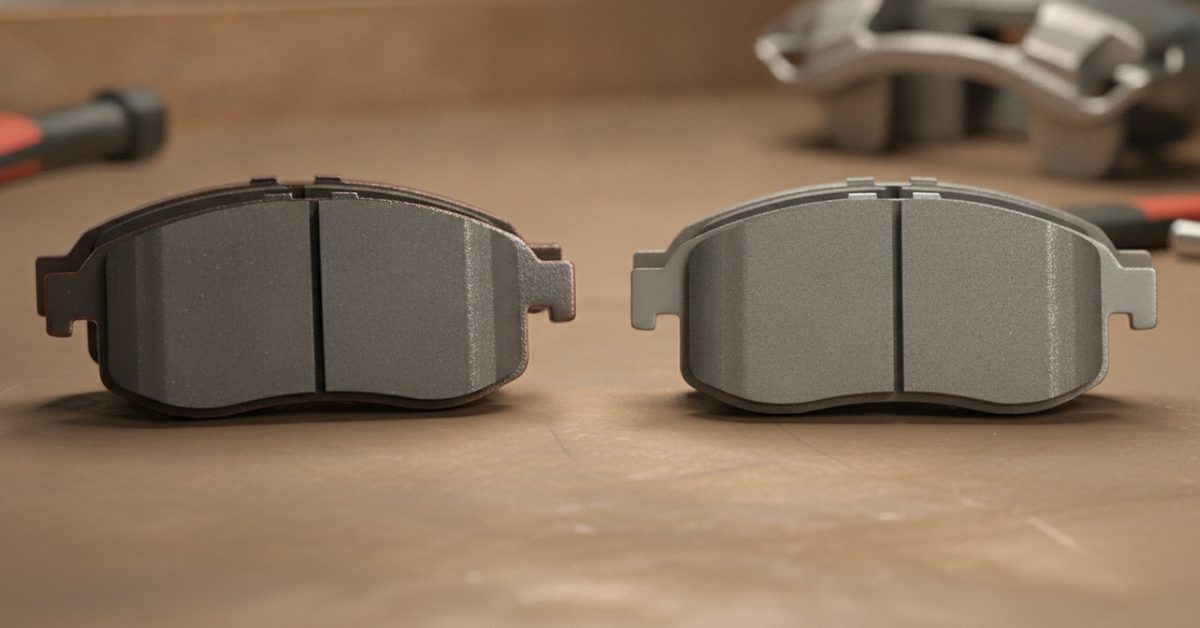
Bremex vs. OEM Brake Pads (2026): Real-World Comparison for Canadian Drivers
Bremex vs OEM brake pads: stopping distance, noise, dust, rotor wear, and total cost of ownership. Save 40–55% without sacrificing safety.
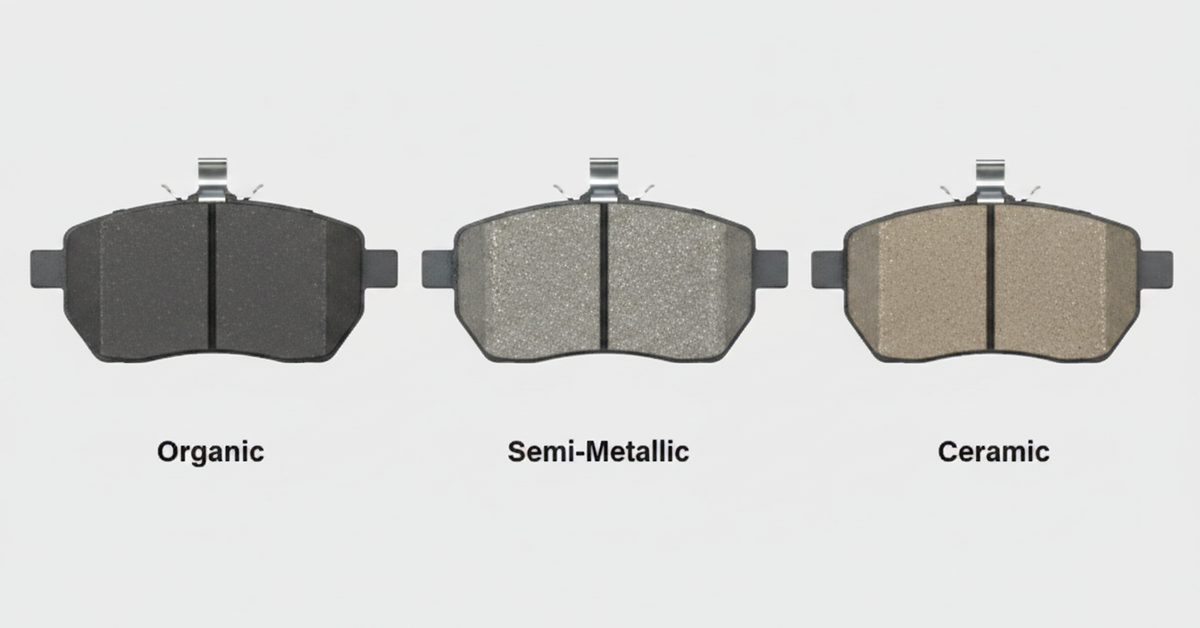
How to Choose Brake Pads (2026): Ceramic vs Semi-Metallic Guide
Ceramic vs semi-metallic brake pads: which type for daily driving, towing, or performance. Complete Canadian buyer's guide for 2026.
Buckshot Rugged Terrain Tires Canada: Sizes, Ratings and Review Guide
Buckshot Rugged Terrain tires for Canadian trucks and SUVs: the brand's history, 14 LT sizes with load and speed ratings, snow notes and who should buy.