
Wheel Offset Explained: A Beginner's Guide to Getting the Perfect Fit

If you're upgrading your vehicle's wheels, understanding wheel offset is just as important as knowing your bolt pattern. The wrong offset can cause rubbing, poor handling, premature wear, and even safety issues. This guide breaks down everything you need to know.
What Is Wheel Offset?
Wheel offset is the distance (in millimeters) between the centerline of the wheel and the wheel's mounting surface (where the wheel bolts to the hub).
It's typically marked on the wheel as ET followed by a number (from the German word Einpresstiefe, meaning "insertion depth"). For example, ET45 means a +45mm offset.
Three Types of Offset
Positive Offset (Most Common)
The mounting surface is toward the front face of the wheel (street side). This pushes the wheel inward toward the suspension.
- Common values: +35 to +55mm
- Used on: Most modern passenger vehicles, SUVs
- Examples: Toyota Camry (
+45), Honda Civic (+45), VW Golf (~+45)
Negative Offset
The mounting surface is toward the back of the wheel (inside). This pushes the wheel outward from the vehicle.
- Common values: -10 to -25mm
- Used on: Deep-dish wheels, lifted trucks, off-road builds
- Effect: Wider stance, wheels stick out past fenders
Zero Offset
The mounting surface is exactly at the centerline of the wheel.
- Common on: Some classic cars and trailers
- Effect: Neutral positioning
Why Does Wheel Offset Matter?
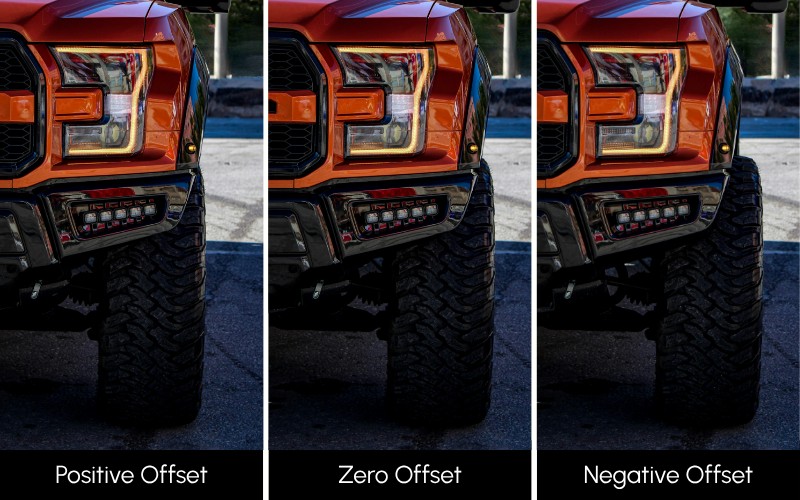
Getting the offset wrong can cause serious problems:
| Too Much Positive Offset | Too Much Negative Offset |
|---|---|
| Wheels tucked too far in | Wheels poke out past fenders |
| Inner fender rubbing | Outer fender rubbing |
| Stress on suspension components | Increased steering effort |
| Reduced track width | Accelerated wheel bearing wear |
| Clearance issues with brakes | Potential legality issues |
A difference of just 5-10mm from your vehicle's recommended offset can cause noticeable handling changes. Always stay within the manufacturer's recommended range or consult a wheel specialist.
Common Factory Offsets by Vehicle Type
| Vehicle Type | Typical Offset Range |
|---|---|
| Compact cars (Civic, Corolla) | +40 to +50mm |
| Mid-size sedans (Camry, Accord) | +38 to +50mm |
| Sports cars (Mustang, 86) | +35 to +48mm |
| SUVs (RAV4, CR-V, Tiguan) | +35 to +50mm |
| Trucks (F-150, Silverado) | +15 to +35mm |
| Lifted trucks & off-road | -25 to +15mm |
How to Measure Wheel Offset
You can measure offset at home with a straightedge and a ruler:
Step 1: Measure Total Wheel Width
Lay the wheel face-down. Place a straightedge across the back lip. Measure the total distance from the mounting surface to the straightedge. Call this A.
Step 2: Find the Centerline
Measure the total width of the wheel barrel (inner lip to outer lip). Divide by 2. This is your centerline distance.
Step 3: Calculate Offset
Offset = A - Centerline distance
- If the result is positive → positive offset
- If the result is negative → negative offset
- If the result is zero → zero offset
Don't want to do the math? Use our Wheel Offset Calculator — just enter your current and desired wheel specs and we'll show you exactly how the fitment changes.
Offset vs. Backspacing
These terms are related but different:
- Offset = distance from centerline to mounting surface
- Backspacing = distance from the back edge of the wheel to the mounting surface
Converting between them:
Backspacing = (Wheel Width / 2) + Offset
Offset = Backspacing - (Wheel Width / 2)
Example: A 9" wide wheel (228.6mm) with +35mm offset has:
Backspacing = (228.6 / 2) + 35 = 149.3mm = ~5.88"
What Happens If I Change Offset?
Going to a Lower Offset (e.g., +45 → +35)
- Wheels move outward by 10mm per side
- Wider stance
- May need fender modifications
- Check for outer fender clearance
Going to a Higher Offset (e.g., +35 → +45)
- Wheels move inward by 10mm per side
- Narrower stance
- May rub on inner fender or suspension
- Check for caliper clearance
General rule: Stay within ±10mm of your factory offset for a trouble-free fit.
Wheel Spacers: An Alternative to Offset Changes
If you love a set of wheels but the offset isn't quite right, wheel spacers can help:
- 5mm spacers: Subtle change, minimal visual effect
- 10-15mm spacers: Noticeable wider stance
- 20mm+ spacers: Significant change, may require longer studs
Always use hub-centric spacers with proper extended studs or bolt-on spacers. Loose or generic spacers are dangerous. Cheap spacers are never worth the risk.
Offset and Tire Size Interaction
When you change wheel width, you typically need to adjust offset to maintain the same fitment:
- Going wider (e.g., 7.5" → 8.5") while keeping the same offset means the wheel grows in both directions — 12.7mm inward AND 12.7mm outward
- To keep the outer lip in the same position, increase offset by ~12.7mm
- To keep the inner lip in the same position, decrease offset by ~12.7mm
Frequently Asked Questions
What offset do I need for a flush fitment?
This depends on your vehicle, fender shape, and suspension setup. Generally, an offset 5-15mm lower than stock combined with a slightly wider wheel and appropriate tire size gives a flush look without rubbing.
Can wrong offset damage my car?
Yes. Excessive negative offset puts extra stress on wheel bearings, ball joints, and tie rods. Excessive positive offset can cause brake clearance issues and inner fender damage.
Is ET the same as offset?
Yes. ET (Einpresstiefe) is the European designation for wheel offset. ET45 = +45mm offset.
Do I need new lug nuts when changing offset?
Not specifically for offset changes, but if you're changing wheel brands, check the lug nut seat type (conical, ball, or flat).
Get the Right Fitment
Every wheel we sell at Autrex includes detailed offset specifications. Use our vehicle fitment tool to find wheels with the perfect offset for your ride — no guesswork needed.
Autrex
Automotive experts at Autrex providing in-depth guides on tires, wheels, and vehicle maintenance to help you make informed decisions.
Related Articles

Bolt Patterns: A Complete Guide to 5x112, 5x100 Wheels, and More
Complete guide to wheel bolt patterns including 5x112, 5x100, and dual bolt patterns. Learn how to measure, identify, and find the right bolt pattern for your vehicle.

Dual Bolt Pattern Wheels: What They Are & Which Vehicles Use Them
Dual bolt pattern wheels explained: what they are, which vehicles use them, popular 5x114.3/5x120 combos, and whether they’re right for your build. Complete guide.

What Is a Bolt Pattern? A Complete Guide to Wheel Fitment
Learn what a bolt pattern is, why it matters for wheel fitment, common bolt patterns by vehicle, and how to find yours.