
What Is a Bolt Pattern? A Complete Guide to Wheel Fitment

A bolt pattern (also called a lug pattern or PCD) is the number of bolt holes on a wheel and the diameter of the circle through their centres. For example, 5x114.3 means five holes on a 114.3 mm circle, and it must match your vehicle's hub for the wheel to fit safely. In this guide, we'll explain how bolt patterns work, show common patterns by vehicle make and help you find yours before you choose a new set of wheels.
What Is a Bolt Pattern?
A bolt pattern, also known as a wheel bolt pattern, lug pattern, or PCD (Pitch Circle Diameter), is a specification that defines two things:
- The number of bolt holes (or lugs) on the wheel
- The diameter of the imaginary circle formed by the centers of those bolt holes
The bolt pattern is expressed as two numbers. For example, 5x114.3 means:
- 5 — five bolt holes
- 114.3 — the bolt holes sit on a circle with a 114.3mm diameter
This measurement must match between your vehicle's hub and the wheel you're installing. If it doesn't match, the wheel simply won't mount — or worse, it'll mount improperly and create a dangerous situation.
Why Does the Bolt Pattern Matter?
Compatibility
Bolt patterns vary between different vehicle makes and models. Using wheels with an incorrect bolt pattern results in poor fitment, handling issues, and potentially dangerous driving conditions.
Safety
A properly matched bolt pattern ensures the wheel is securely attached to the hub. An incorrect fit can lead to loose wheels, vibration, and potential wheel separation at speed — a catastrophic failure.
Performance
Wheels with the correct bolt pattern optimize the distribution of weight and stress on the vehicle's suspension, promoting better handling, more even tire wear, and overall vehicle performance.
Aesthetics
The choice of wheels also influences your vehicle's appearance. Having the correct bolt pattern is the starting point for any wheel upgrade — without it, even the best-looking wheels won't work.
Common Bolt Patterns by Vehicle Make
While there are dozens of bolt patterns in use, here are the most common ones and the vehicles that use them:
| Bolt Pattern | Common Vehicles |
|---|---|
| 4x100 | Honda Civic (older), Mazda Miata, Toyota Yaris, BMW E30 |
| 4x10⁸ | Ford Fiesta, Peugeot, Citroën |
| 5x100 | Subaru (WRX, Impreza), Toyota (Corolla, Prius), VW Golf Mk4 |
| 5x10⁸ | Volvo, Ford (Fusion, Focus), Jaguar |
| 5x112 | Audi, Volkswagen (Golf Mk5+), Mercedes-Benz |
| 5x114.3 | Honda, Toyota (Camry, RAV4), Nissan, Hyundai, Kia, Ford Mustang |
| 5x120 | BMW, older Honda Odyssey, Land Rover, Tesla Model 3 |
| 5x127 | Jeep Wrangler (JK/JL), Dodge, Chrysler |
| 5x130 | Porsche (911, Cayenne), Mercedes Sprinter |
| 6x135 | Ford F-150, Lincoln, Expedition |
| 6x139.7 | Toyota Tacoma/4Runner, Chevy Silverado, GMC Sierra, Nissan Titan |
| 8x165.1 | Ford F-250/F-350 (older), Dodge Ram 2500 |
| 8x170 | Ford Super Duty (1999-2004) |
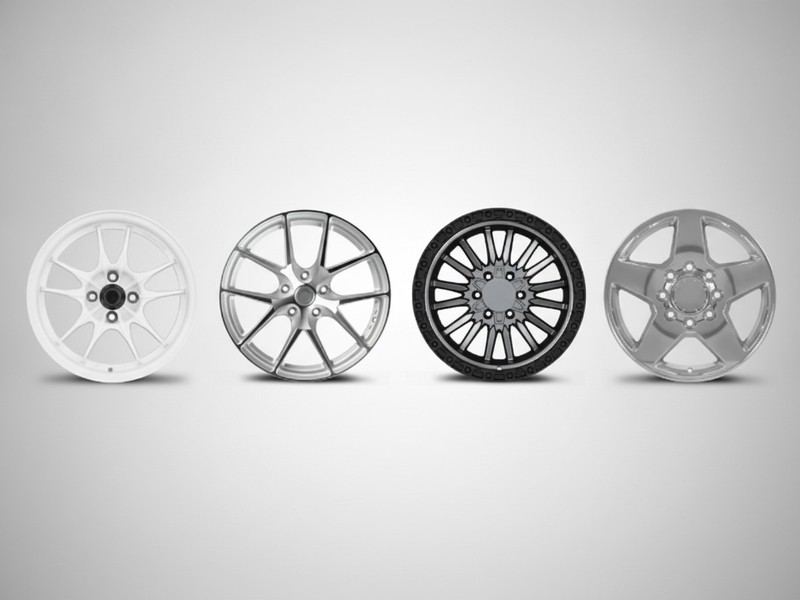
Looking for wheels that match your bolt pattern? Browse our complete wheel collection — filter by bolt pattern, size, and vehicle to find guaranteed-fitment options.
How to Find Your Vehicle's Bolt Pattern
There are several ways to determine your bolt pattern:
1. Check Your Owner's Manual
The specifications section of your owner's manual lists the factory wheel size and bolt pattern.
2. Check the Driver's Door Jamb
Many vehicles have a tire and wheel information placard on the driver's door jamb that includes bolt pattern information.
3. Measure It Yourself
You can measure the bolt pattern directly on the wheel. The method depends on whether you have an even or odd number of lugs:
- Even number (4, 6, 8 lugs): Measure from the center of one bolt hole straight across to the center of the opposite hole.
- Odd number (5 lugs): Measure from the center of one bolt hole to the far edge of the bolt hole farthest away.
For a detailed walkthrough, see our complete guide to measuring bolt patterns.
4. Use an Online Database
Websites and fitment tools allow you to enter your year, make, and model to look up the bolt pattern instantly.
Other Fitment Specifications to Know
The bolt pattern is just one part of wheel fitment. For a proper fit, you also need to match:
Wheel Offset
The distance from the wheel's mounting surface to its centerline, measured in millimeters. Offset affects how far the wheel sits in or out of the fender.
- Positive offset — mounting surface is toward the outside (street side) of the wheel
- Zero offset — mounting surface is at the centerline
- Negative offset — mounting surface is toward the inside (brake side) of the wheel
Learn more in our wheel offset guide.
Hub Bore (Center Bore)
The diameter of the hole in the center of the wheel. It must be equal to or larger than your vehicle's hub diameter. If the wheel's center bore is larger, you'll need hub centric rings to eliminate vibration.
| Vehicle Brand | Typical Hub Bore |
|---|---|
| Volkswagen/Audi | 57.1mm |
| BMW | 72.6mm |
| Mercedes-Benz | 66.6mm |
| Honda | 64.1mm |
| Toyota | 60.1mm |
| Ford (cars) | 63.4mm |
Lug Nut Seat Type
Different wheels require different lug nut styles:
- Conical (taper) — most common (Honda, Toyota, Ford, GM)
- Ball (radius) — BMW, Mercedes, Audi, VW
- Flat seat (mag) — some aftermarket wheels
Using the wrong lug nut type can result in improper seating, loose wheels, and damaged bolt holes.
Can You Change a Vehicle's Bolt Pattern?
Technically, yes — using wheel adapters or spacers. These bolt to your hub and provide a different bolt pattern for the wheel. Common conversions include:
- 5x100 to 5x114.3 (Subaru owners wanting Honda/aftermarket wheels)
- 5x112 to 5x120 (VW/Audi owners running BMW wheels)
Wheel adapters add complexity, weight, and potential points of failure. They're acceptable for show cars but not recommended for daily drivers or high-performance use. Always choose wheels that natively match your bolt pattern when possible.
Dual Bolt Pattern Wheels
Some aftermarket wheels feature two sets of bolt holes, making them compatible with two different bolt patterns. Common dual patterns include:
- 5x100 / 5x114.3 — fits Subaru/Toyota and Honda/Nissan
- 5x112 / 5x120 — fits VW/Audi and BMW
- 6x135 / 6x139.7 — fits Ford F-150 and GM/Toyota trucks
These are a great option for versatility and resale value. Learn more in our dual bolt pattern wheels guide.
Frequently Asked Questions
What does 5x114.3 bolt pattern mean?
It means the wheel has 5 bolt holes arranged on a circle with a 114.3mm diameter. This is one of the most common bolt patterns, used by Honda, Toyota (Camry), Nissan, Hyundai, Kia, and many others.
Can I put 5x112 wheels on a 5x114.3 car?
No, not without adapters. Although the numbers are close, the bolt holes won't align. A 2.3mm difference is enough to prevent mounting. Never force a wheel onto a mismatched bolt pattern.
Are bolt patterns universal?
No. There are dozens of different bolt patterns in use across different manufacturers. Even within the same brand, different models may use different patterns. Always verify before purchasing wheels.
Do all 5-lug wheels fit the same?
No. "5-lug" only tells you the number of bolt holes — the circle diameter (the second number) varies widely. A 5x100, 5x112, 5x114.3, and 5x120 are all 5-lug patterns but are completely different and not interchangeable.
How do I measure a 5-lug bolt pattern without removing the wheel?
You can measure through the center cap or use a bolt pattern gauge. Measure from the center of one lug stud to the far edge of the stud farthest from it. For detailed instructions, see our bolt pattern measurement guide.
Understanding your bolt pattern is the first step to any wheel upgrade. Getting it right ensures safety, performance, and the look you want. If you're unsure about your fitment, our team is always happy to help.
Autrex
Automotive experts at Autrex providing in-depth guides on tires, wheels, and vehicle maintenance to help you make informed decisions.
Related Articles

Bolt Patterns: A Complete Guide to 5x112, 5x100 Wheels, and More
Complete guide to wheel bolt patterns including 5x112, 5x100, and dual bolt patterns. Learn how to measure, identify, and find the right bolt pattern for your vehicle.

How to Measure Bolt Patterns on Wheels: A Complete Guide
Step-by-step guide to measuring bolt patterns on 4, 5, 6, and 8 lug wheels. Learn the right technique for accurate rim measurements.

Dual Bolt Pattern Wheels: What They Are & Which Vehicles Use Them
Dual bolt pattern wheels explained: what they are, which vehicles use them, popular 5x114.3/5x120 combos, and whether they’re right for your build. Complete guide.