
Best Tires for Ford F-150 in Canada (2026): All-Season, AT & Winter Options
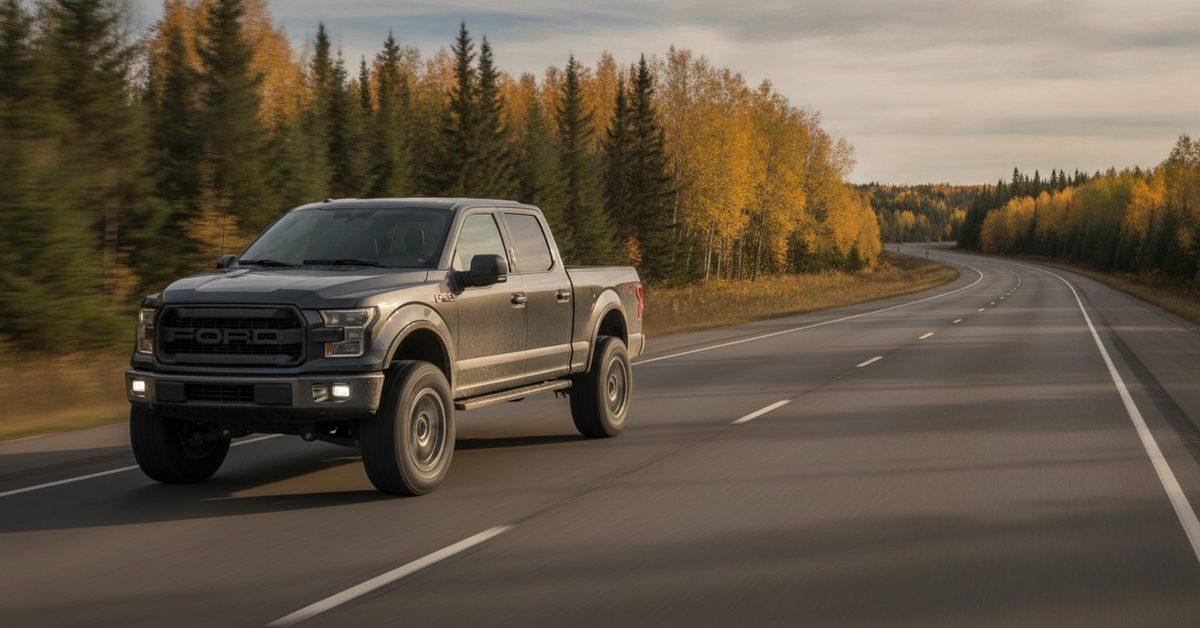
The Ford F-150 has been Canada's best-selling truck for decades. It's the default choice for contractors, fleet operators, weekend warriors, and families who need a truck that does everything.
But "everything" means different tires for different owners. The tire that works for a daily commuter F-150 is different from the tire that works for a work truck, which is different from what you need if you're towing a 30-foot trailer.
Here's the complete breakdown of what actually works for F-150 owners in Canada.
Ford F-150 Tire Sizes by Trim (2021–2026)
| Trim | OEM Tire Size | Rim Size | Notes |
|---|---|---|---|
| XL / XLT (base) | 265/70R17 | 17" | Most common work truck size |
| XLT / Lariat | 275/55R20 | 20" | Highway-focused sizing |
| Lariat / Platinum | 275/60R20 | 20" | Taller sidewall than 55 series |
| Limited | 275/55R20 | 20" | Luxury highway setup |
| Raptor | 315/70R17 | 17" | Off-road optimized |
| Raptor R | 37x12.50R17 | 17" | 37" diameter for maximum off-road |
The 17" size on base XL and XLT trucks is the sweet spot for tire availability and pricing. The 20" sizes on higher trims look better but offer less sidewall protection and fewer winter tire options.
Use Case Breakdown: What F-150 Owners Actually Need
Daily Commuter / Light Duty
If your F-150 is primarily a daily driver with occasional Home Depot runs, you want:
- Long tread life — you're putting on 25,000+ km per year
- Low road noise — highway comfort matters
- Reasonable fuel economy — the F-150 isn't efficient to begin with
- Wet weather grip — Ontario's summer thunderstorms
An all-season highway tire is the right choice. Look for treadwear ratings of 600+ and highway terrain (HT) tread patterns rather than all-terrain.
Work Truck / Job Site
If your F-150 sees construction sites, gravel roads, and muddy conditions:
- Durability — sidewall strength for job site debris
- Load capacity — you're hauling tools and materials
- All-terrain capability — grip on loose surfaces
- Puncture resistance — tougher construction than passenger tires
An all-terrain tire or a light truck all-season with reinforced sidewalls is appropriate.
Towing / Heavy Haul
If you're towing 5,000+ lbs regularly:
- Load range E or D — higher capacity for the tongue weight
- Heat resistance — towing generates tire heat
- Stability — stiffer sidewalls reduce sway
- Speed rating consideration — if you're towing at highway speed, don't underspec
See the tire load ratings guide for how to match tire capacity to your towing needs.
Off-Road / Weekend Warrior
If your F-150 hits trails, mud, or snow-covered forest roads:
- Aggressive tread pattern — mud terrain (MT) or aggressive all-terrain (AT)
- Sidewall protection — thicker rubber, sometimes with side lugs
- Self-cleaning tread — ejects mud so the tire can grip
The Atturo Trail Blade series is purpose-built for this. See the Trail Blade AT vs XT vs MT comparison for detailed recommendations.
All-Season Highway Recommendations
For the daily commuter F-150, highway terrain (HT) tires offer the best combination of ride quality, tread life, and fuel economy.
The Haida HD878 is a highway all-season for trucks that delivers solid performance at a budget-friendly price point. It's not an off-road tire — it's designed for pavement, light gravel, and occasional wet grass. For the typical F-150 owner who drives 80% highway, it works.
For more demanding highway use or heavier loads, mid-range options from Falken, Hankook, or Kumho offer better heat tolerance and longer tread life.
All-Terrain Recommendations
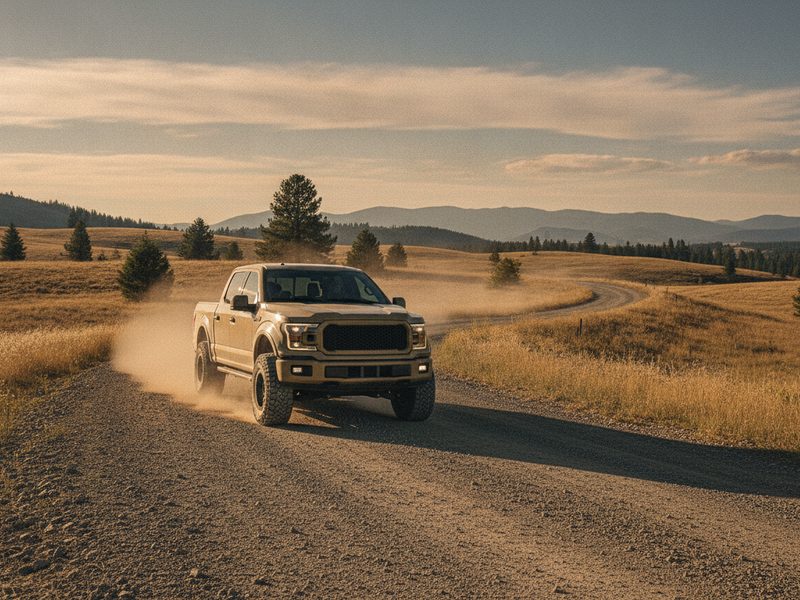
For the F-150 owner who needs genuine off-road capability, the Atturo Trail Blade series is purpose-built:
Trail Blade A/T — The daily driver who occasionally goes off-road. Quiet enough for highway commuting, capable enough for gravel roads and light trails. From $177.
Trail Blade X/T — The 50/50 split. Half highway, half trail. More aggressive than the A/T but still civilized for daily use. From $216.
Trail Blade M/T — Serious off-road. Mud, rocks, heavy terrain. Loud on highway, unbeatable off-road. From $278.
For the full comparison, see the Trail Blade AT vs XT vs MT guide.
Winter Tires for the F-150: Why Truck Owners Often Skip This
Here's the reality: a lot of F-150 owners in Ontario run all-season or all-terrain tires year-round. Some get away with it. Others get stuck in a snowy parking lot or slide through an intersection in January.
The F-150 has advantages in winter — weight over the rear axle (if you load it), ground clearance, and often 4WD. But 4WD helps you accelerate; it doesn't help you stop. In heavy snow and cold temperatures, a dedicated winter tire significantly outperforms any all-season or all-terrain.
Winter Tire Options for F-150
The 17" and 18" sizes common on XL and XLT trucks have good winter tire availability. The 20" sizes on Lariat and up are more limited — another reason some F-150 owners downsize to 17" or 18" wheels for winter.
Look for:
- 3PMSF snowflake certification — the winter performance standard
- LT spec for heavy trucks — higher load capacity
- Studded options if legal in your province — Alberta and parts of BC allow studs
Load Rating Importance for Trucks: LT vs. P-Metric
This is where F-150 owners often go wrong.
P-Metric tires (starting with P or no prefix) are designed for passenger cars and light SUVs. They're rated for the weight of a typical crossover or sedan.
LT tires (Light Truck, starting with LT) are designed for the weight and duty cycle of pickup trucks. They have stronger construction, higher load ratings, and are built to handle the heat and stress of truck use.
If your F-150 regularly carries loads or tows, LT tires are the appropriate choice. A P-metric tire on a truck that's working hard is under-spec'd and will wear faster, overheat easier, and potentially fail.
For the complete guide to load ratings and what they mean for truck owners, see the tire load ratings guide.
Budget vs. Premium: Does the F-150 Need Premium Tires?
The honest answer: it depends on use.
Budget tires (Haida, similar): Fine for light-duty daily driving, low annual mileage, or second vehicles. You give up some refinement and longevity, but the fundamentals are there.
Mid-range tires (Falken, Hankook, Kumho): The sweet spot for most F-150 owners. Better tread life, better highway comfort, better wet weather performance than budget options.
Premium tires (Michelin, BFGoodrich, Goodyear): Worth it if you're towing heavy, doing significant highway miles, or keeping the truck long-term. The cost per kilometre often works out similar or better than cheaper tires due to longer wear.
Summary: What to Buy for Your F-150
| Use Case | Recommended Tire |
|---|---|
| Daily commuter, mostly highway | Highway all-season (Haida HD878 or mid-range equivalent) |
| Mixed use, occasional off-road | Atturo Trail Blade A/T |
| 50/50 on-road/off-road | Atturo Trail Blade X/T |
| Serious off-road / mud | Atturo Trail Blade M/T or Trail Blade Boss |
| Heavy towing | LT-spec all-season or all-terrain with Load Range E |
| Winter (all use cases) | Dedicated winter tire, 3PMSF certified, LT-spec if working truck |
The F-150 is versatile. Your tire choice should match how you actually use that versatility.
Brian Barber
Automotive experts at Autrex providing in-depth guides on tires, wheels, and vehicle maintenance to help you make informed decisions.
Related Articles

Tire Recycling Fees in Canada (2026) — What They Are and What You Pay in Every Province
Every province charges a recycling fee on new tires. Here's what it costs in each one, why it's on your bill, and who actually sets the rate.
Best Tires for SUVs in Canada 2026 — RAV4, CR-V, Rogue & Equinox Guide
Best tires for popular Canadian SUVs — RAV4, CR-V, Rogue, Equinox, and Escape. All-season and winter picks by budget, plus AWD considerations.
Best Tires for Canadian Winters: Province-by-Province Guide (2026)
Province-by-province winter tire guide for Canada — from BC's wet ice to Ontario's freeze-thaw to Quebec's heavy snow. Top picks by region and budget.